
Enabling Community Agency for Net-Zero Housing Futures
This project is an attempt to reimagine how housing gets made in London by 2050, not just driven by top-down ambition, but by a collective vision of bottom up resolution. It explores how neighbourhood-scale making might transform housing production and distribution, enabling citizens to co-create climate-resilient and inclusive housing futures , asking who should shape housing decisions, and how public participation could make that fairer?
Role: Design Researcher & Futurist | Duration: 2.5 months | Project Type: End-to-End Individual Research Project
Research Question
London's housing crisis is often framed from a top-down perspective, as a supply problem: in land, in labour, in capital. There is simply no solution if we keep falling into the trap of a production systems designed to exclude the people most affected.
The people most affected by housing decisions have almost no role in shaping them. What are the better questions we need to ask to design the right intervention?
What I Proposed
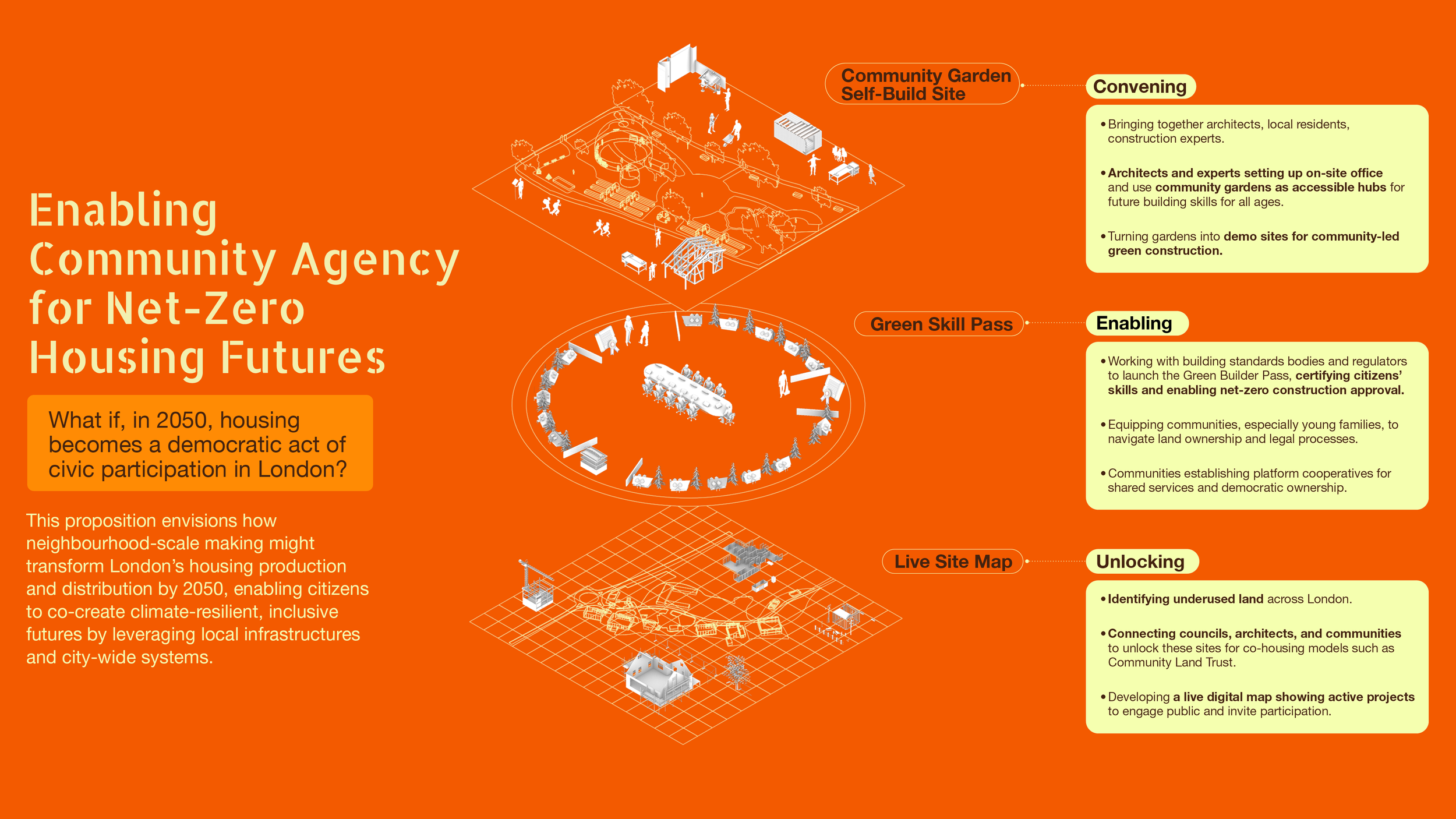
Base on research in the field, I expected to find that community housing needed new infrastructure built from scratch. What I found instead was that the infrastructure already existed: in community gardens, in informal skill-sharing, in people who just showed up and figured it out together. The missing piece wasn't a new institution. It was a way to make that existing activity legible, connectable, and scalable. This led me to propose three interconnected interventions:
Community gardens as skill-building hubs
A Green Builder Pass aligning informal skills with formal standards
A digital mapping platform connecting people, skills, and underused land.
Research Method
I began with desk research and horizon scanning, looking at the development of production systems and land use, alongside case study analysis of alternative housing models and community-led initiatives. Together these helped me map the dynamic system and its stakeholders.
From there I narrowed the focus and looked for entry points into primary research with more accessible stakeholder groups. Through London Community Land Trust networks, I found community gardens as an adjacent field, connected by land use, participatory practice, and community skill-building
The full research process moved through four phases: from horizon scanning and stakeholder mapping, through scenario planning, to field research and design interventions.
Research with




Field notes
-
![]()
Immersive fieldwork
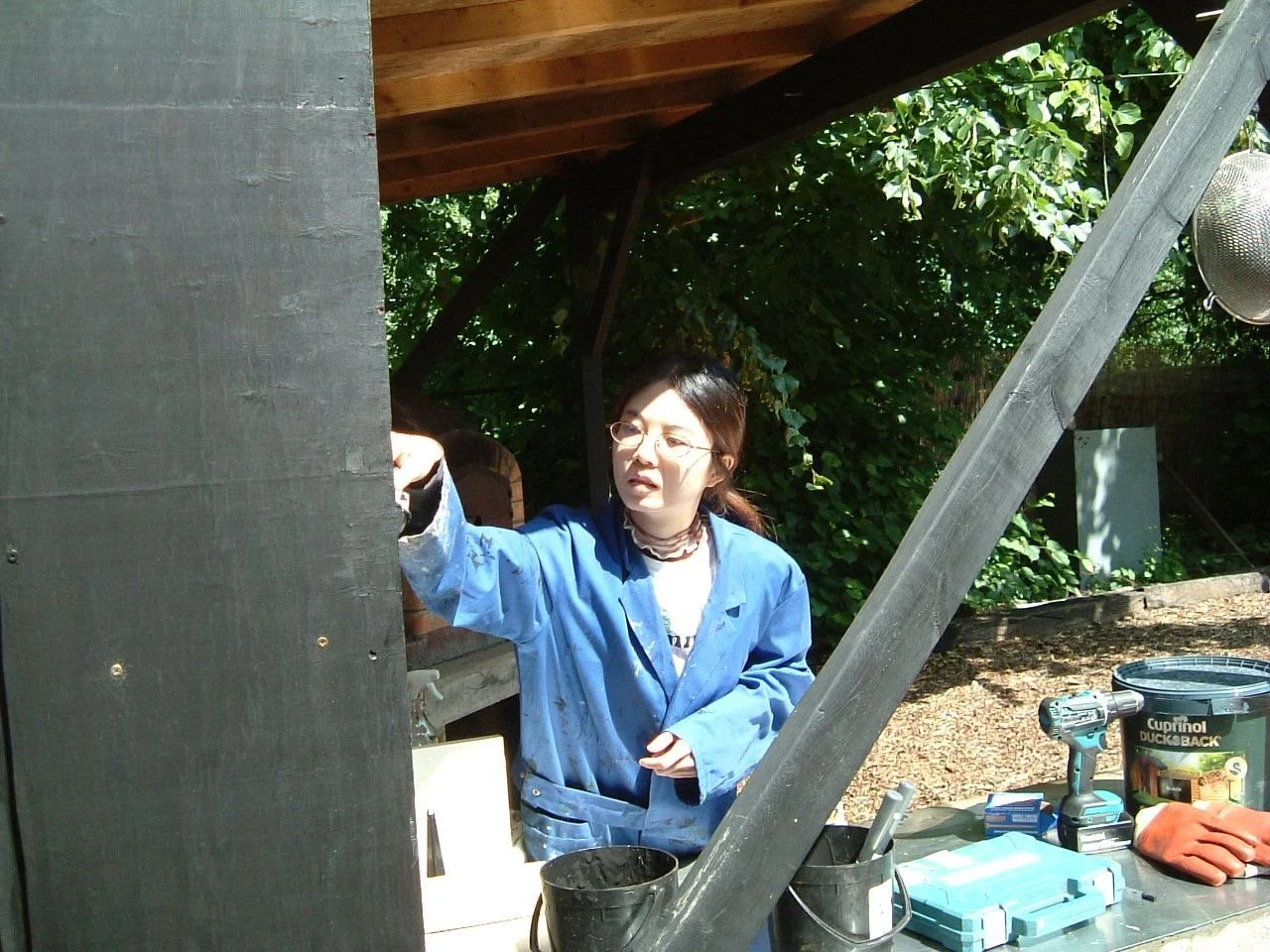
Volunteering at Paradise Cooperative, getting involved, and seeing what I notice when I’m holding a paintbrush.
-
![]()
Immersive fieldwork
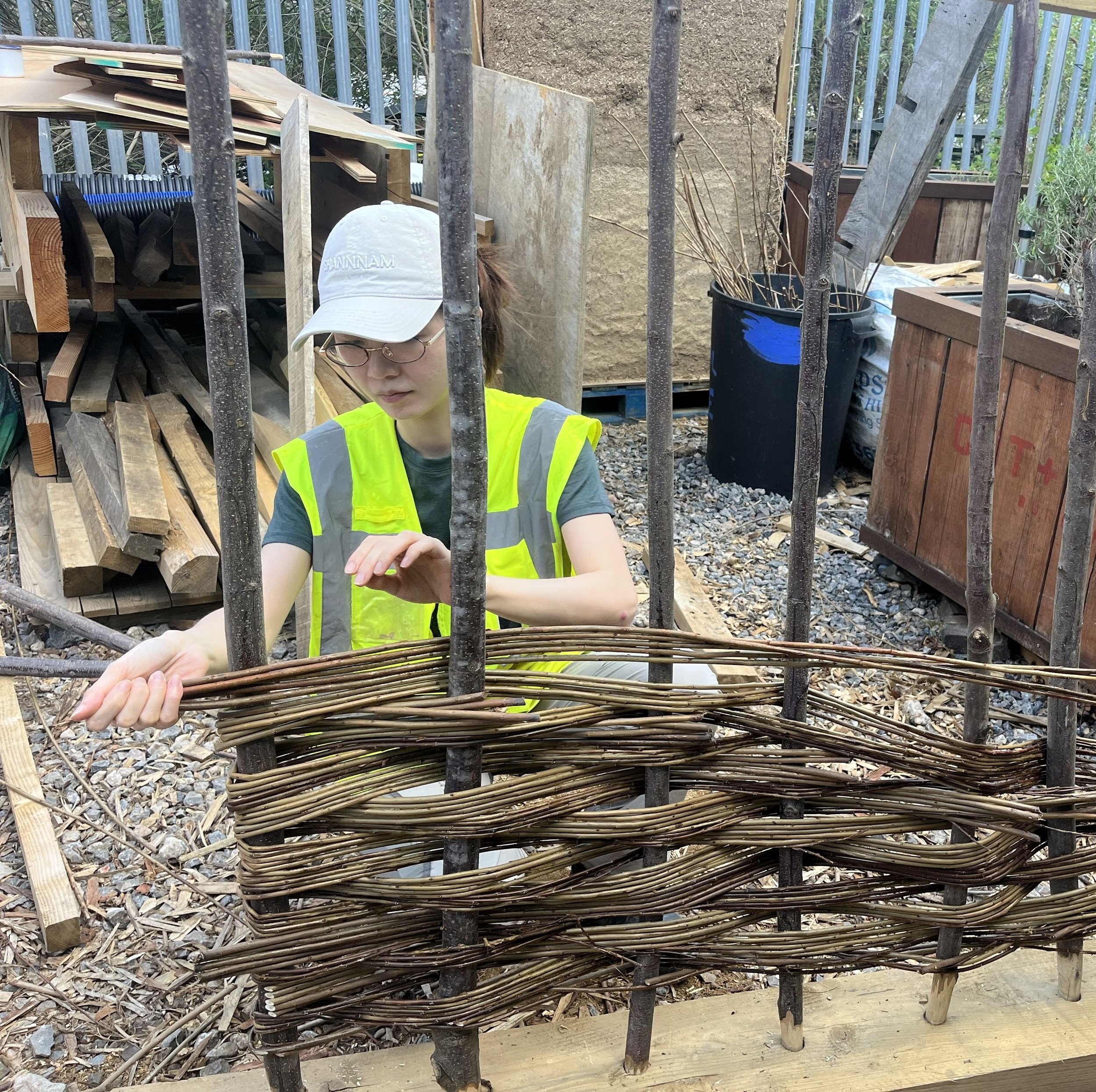
Trying out the willow weaving station at Global Generation. Hands-on, grounding, and genuinely quite smelly.
-
![]()
Experts and Convenors
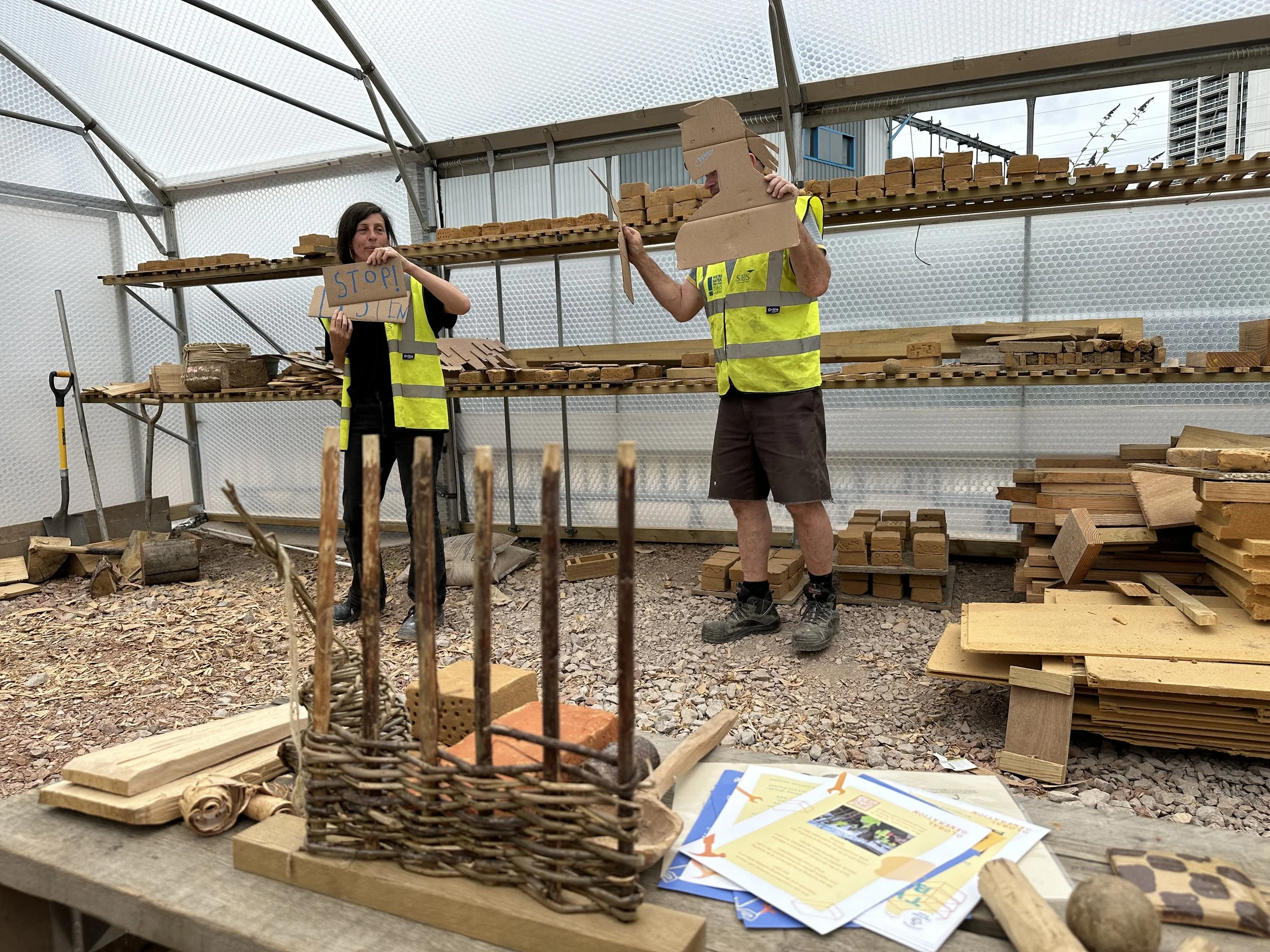
At Global Generation, building sessions opened with storytelling and role-play for all ages. The day I visited, it was a play about a girl questioning why we destroy nature to build. Unexpected, and quietly clarifying: a reminder of what kind of futures this space is working towards.
-
![]()
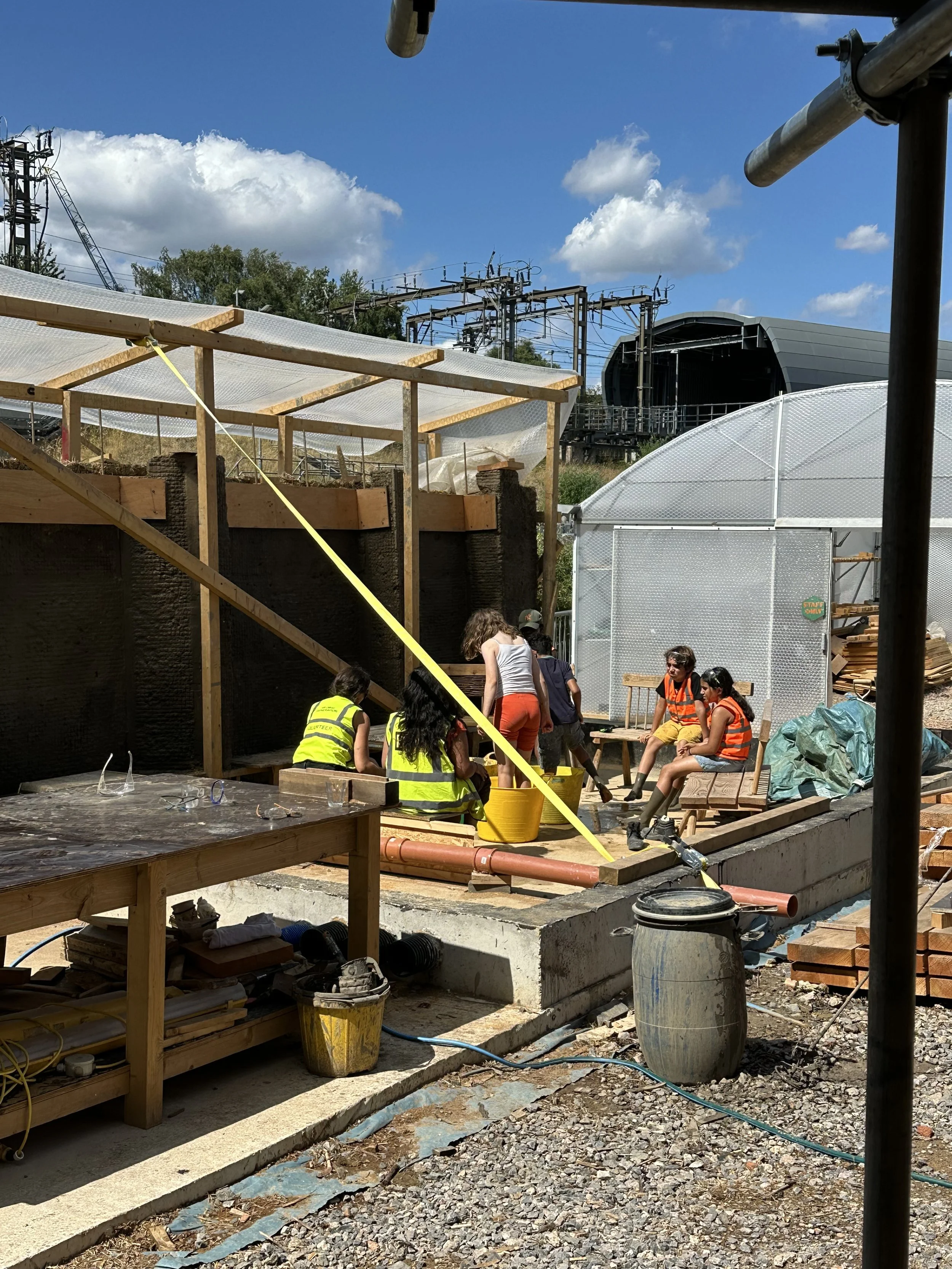
Intergenerational site
The day finish with a food bath in the mud we used to build.
Kids walk away with proud just spend the day help picking metals from the ground.
-
![]()
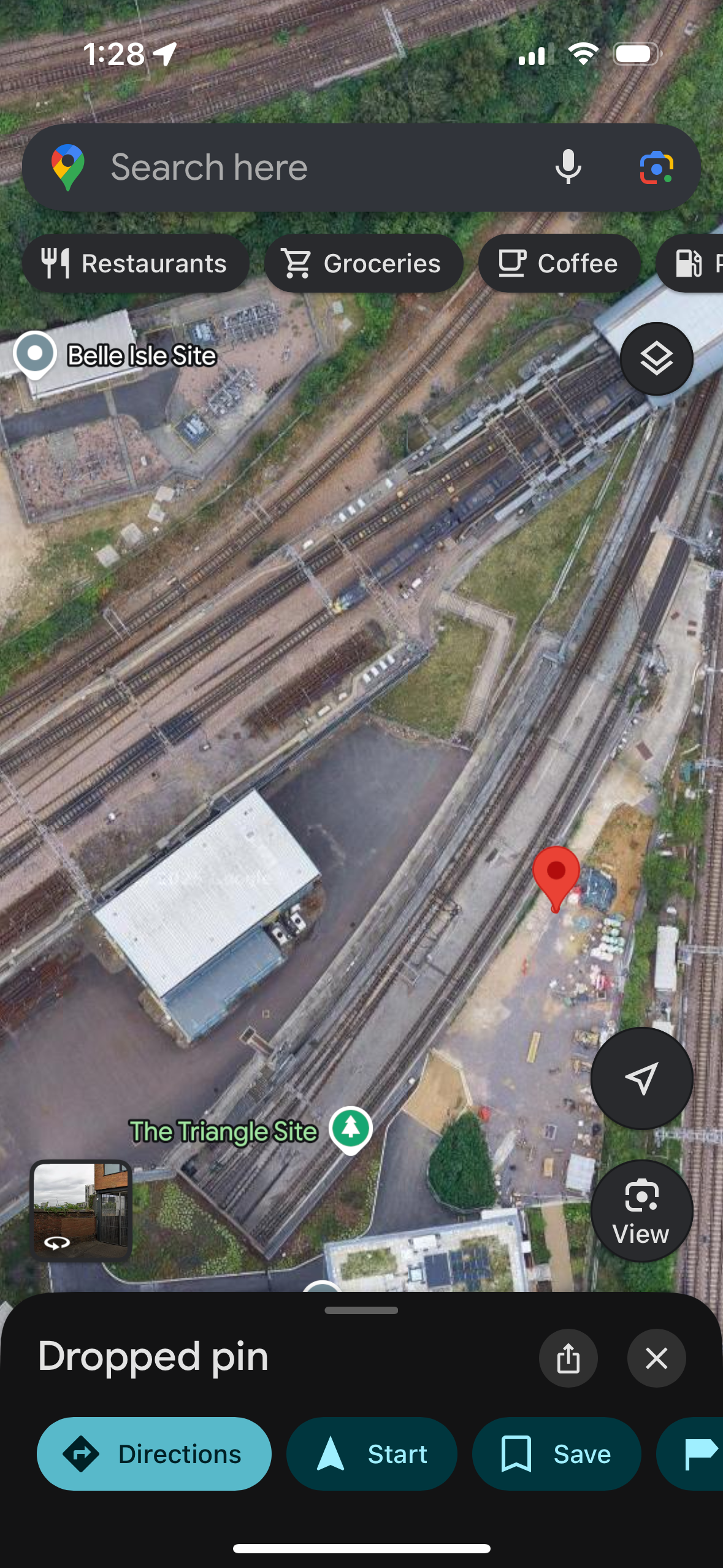
Finding sites
Some locals discovered self-build site simply by browsing maps on their phones, an accidental wayfinding tools that also point to how architects and communities might identify underused urban sites.
-
![]()
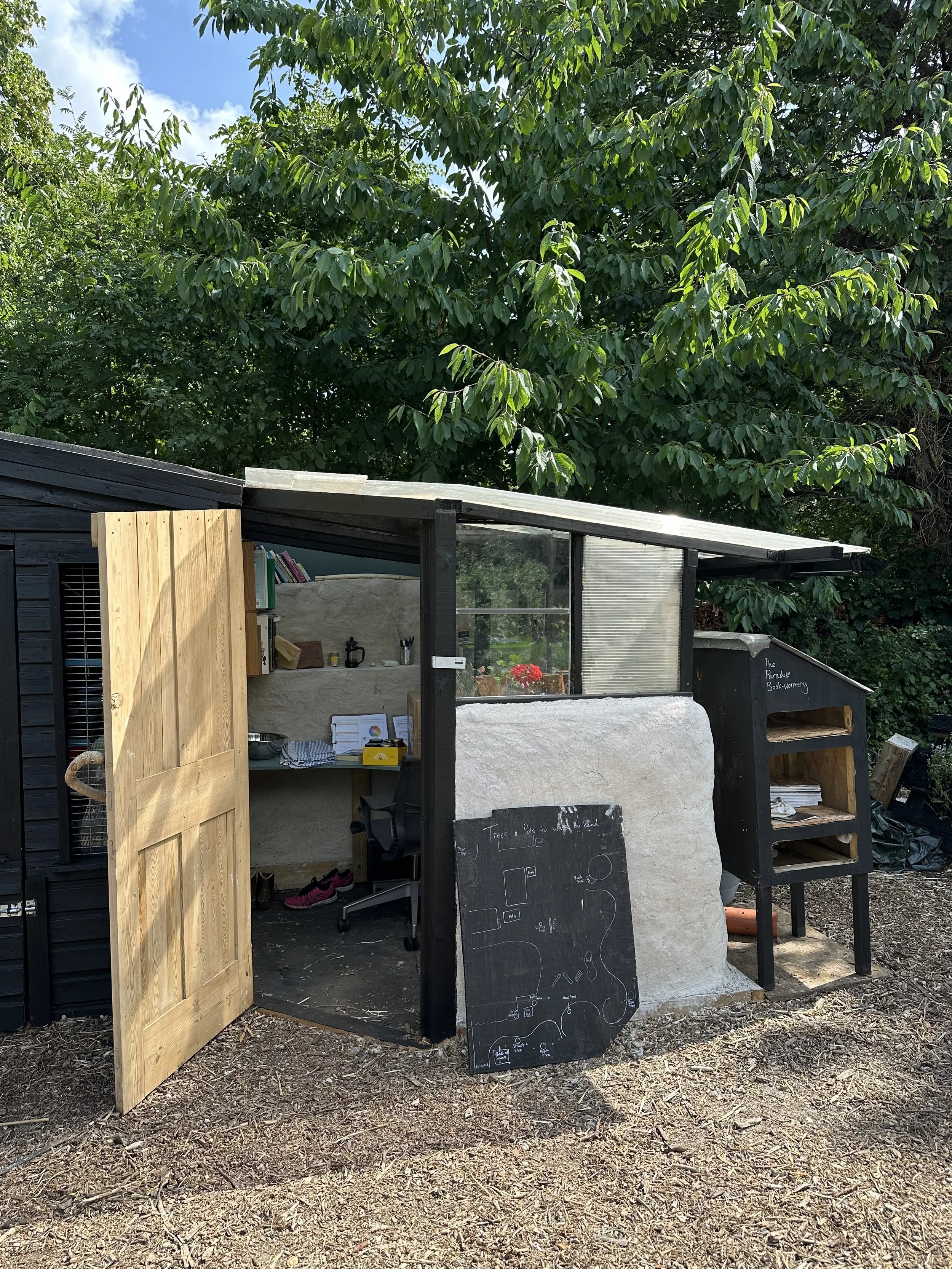
Self-built Office in a community garden
Volunteers built this straw bale office using YouTube tutorials and a handful of people with limited experience in building techniques.
No professional expertise required, just collective learning and willingness to try.
What I Found
-
Act as informal infrastructures for collective making
Enable low-barrier entry to skills
Foster shared learning and collaboration through small builds
Function as social and family-friendly hubs
-
Architects' roles shifting toward facilitators and convenors
Self-build fosters knowledge exchange across generations
Participation enables residents to gain skills while fostering solidarity
-
Enables transparent participation for locals
Helps architects and communities identify opportunities for projects
Functions as a systemic enabler linking local, land, and initiatives
How I tested it
A diegetic prototype of 2050
a tool to encourage dialogue and agency. Visitors experienced a miniature "self-build day" to explore the motives and barriers for citizen-led housing, accessible to all ages.
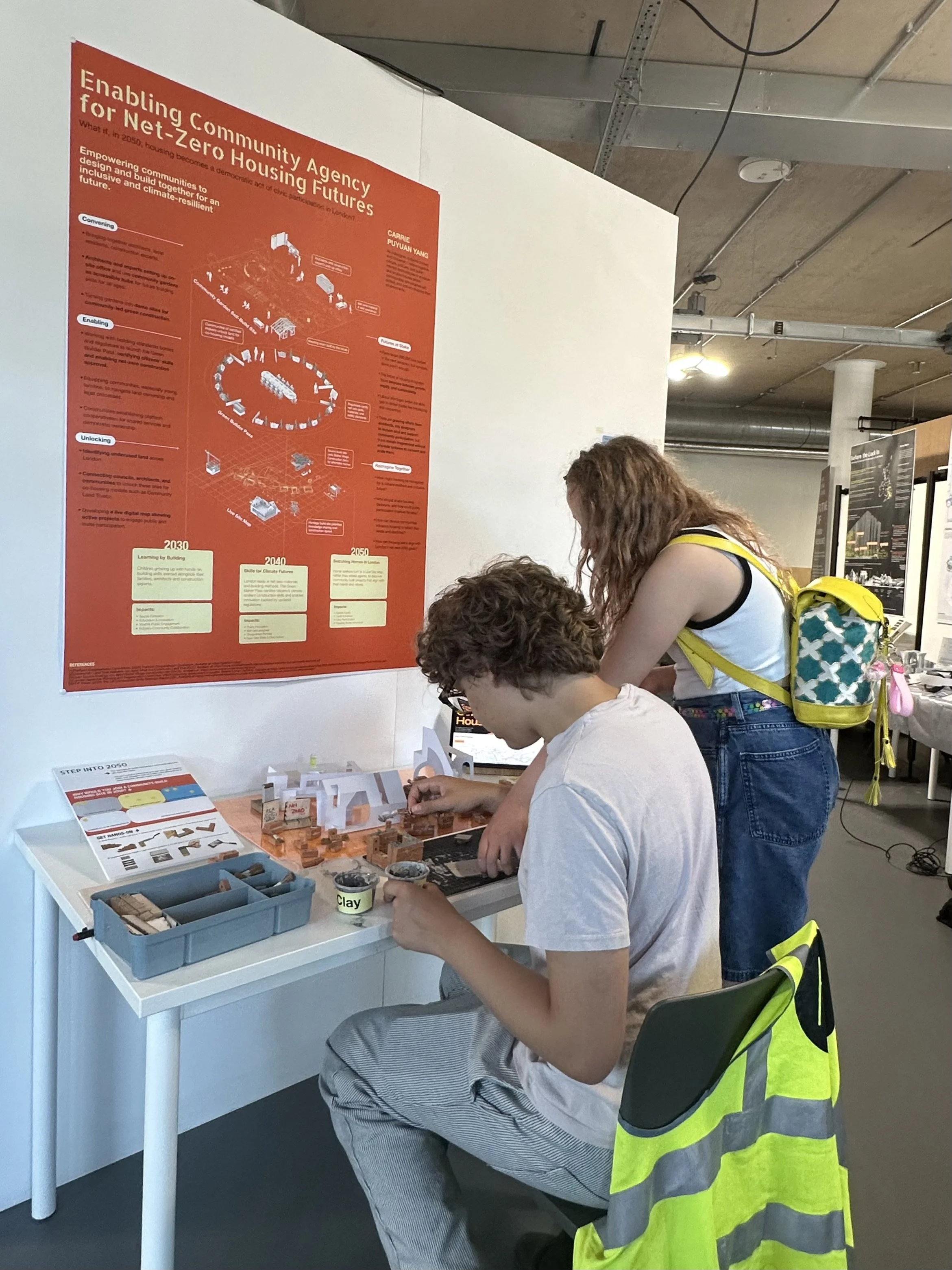
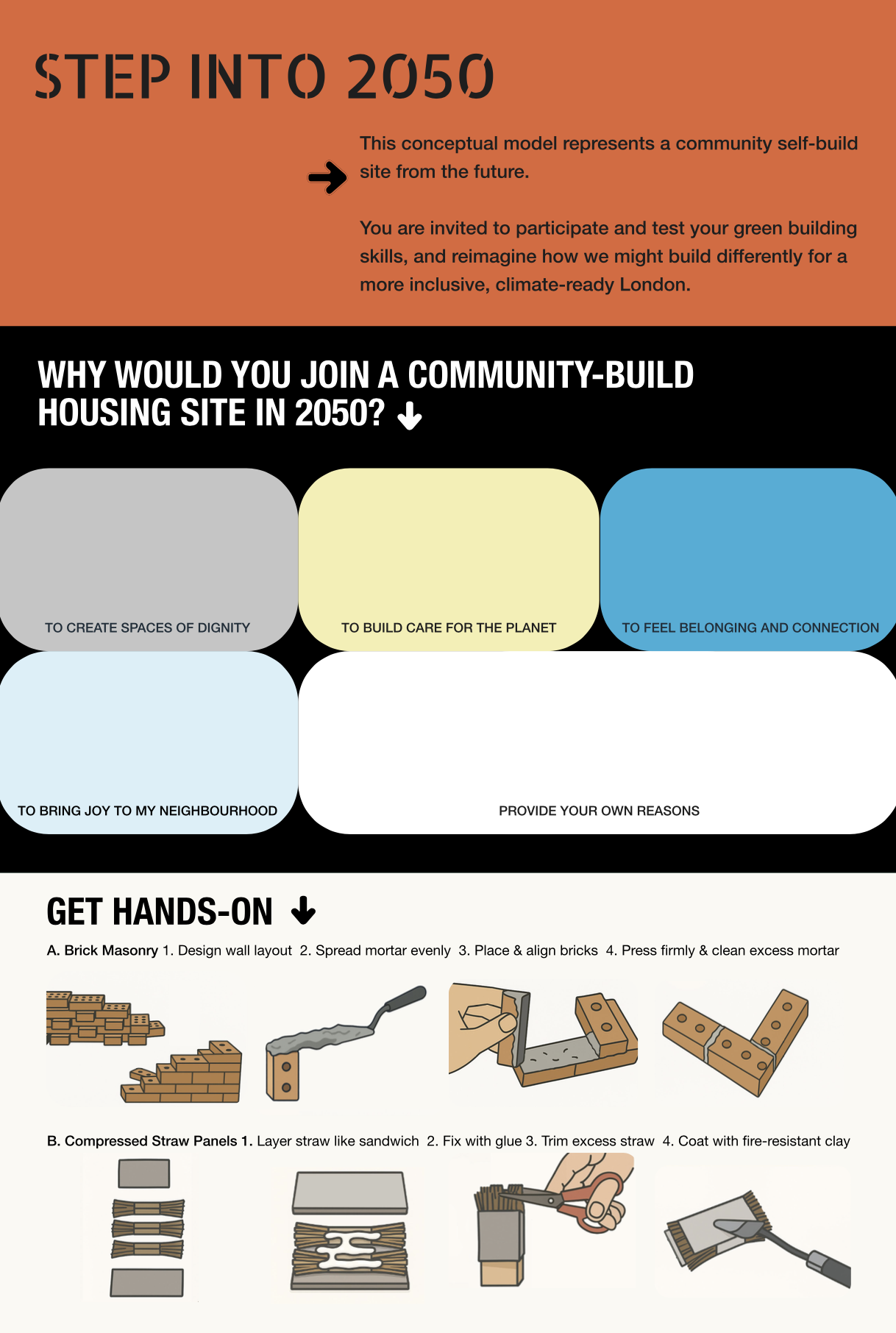
Workstation guidance
Step-by-step guidance for a speculative bricklaying activity, inviting visitors to set their own intentions for future housing.
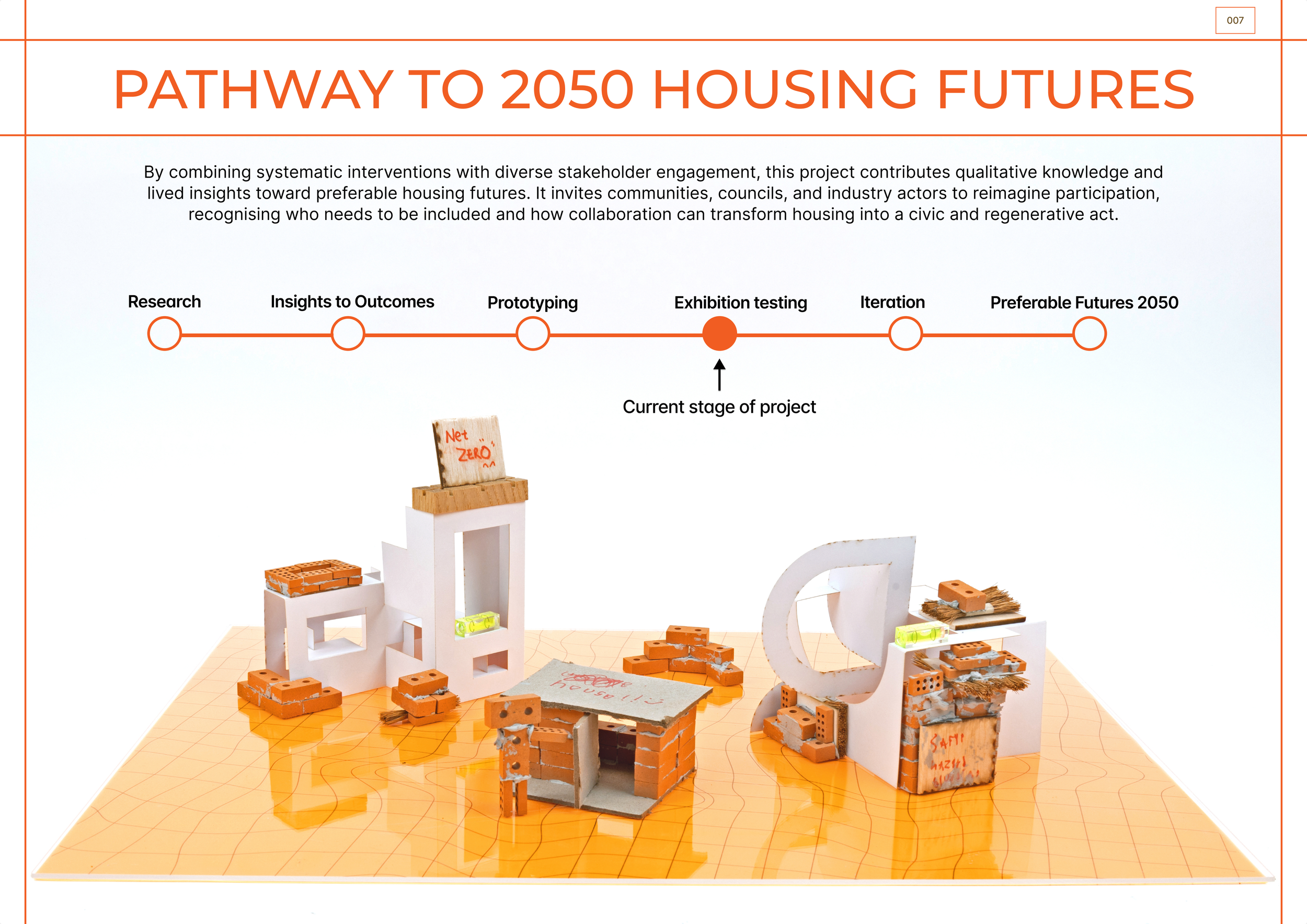
What Needs to Happen Next?
The scope of this project is deliberately holistic: touching skills, regulation, and land use together. That breadth was necessary to understand the shape of the problem before zooming in. An important next step is a strategic roadmap prioritising which layer to focus on first and finding the right collaborators to go deeper with.
Alongside positive feedback there were also critical ones pushed the project further, toward a question I'm still working with: what would make it worth it for communities, councils, architects, and developers to participate in a different system, before that system even exists?
What I learned
I started by asking how neighbourhood infrastructure might be reimagined, expecting new infrastructure from scratch. What I found instead was that it already exists: community gardens are already informally forming skills and capacity. The real question shifted: not how to build something new, but how to make what's already working legible and lasting.
What still needs critical research is the regulatory and policy layer: how to formalise something informal without losing what makes it work. That requires research with knowledge holders in planning and policy, which sits outside my current scope